
The Presidency on Monday unveiled a seven-week timetable to produce the National Policing Bill that will provide the legal framework for Nigeria’s proposed dual policing system, with the Executive Bill expected on President Bola Tinubu’s desk by September 3 before nationwide consultations and transmission to the National Assembly.
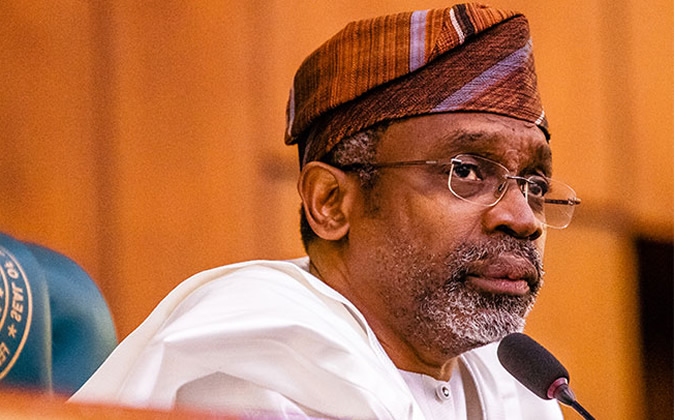
Chairman of the Presidential Working Group on the National Policing Bill and Chief of Staff to the President, Femi Gbajabiamila, while briefing State House Correspondents described the exercise as one of the most consequential reforms of the Tinubu administration, saying the government was determined to ensure that the creation of state police is backed by a comprehensive legal and operational framework.
“The approved work programme is a seven-week, milestone-driven exercise running from July 27 to September 14, 2026,” Gbajabiamila said while briefing journalists after the inaugural meeting of the Presidential Working Group at the State House, Abuja.
“Administrative and technical preparations have been underway, and today’s meeting formally mobilises the next stage.”
He disclosed that “the resulting Executive Bill package is scheduled for presentation to the President on September 3. Subject to his approval, a national consultation on the completed draft will follow, after which the text and supporting materials will be revised and prepared for formal transmission to the National Assembly.”
Gbajabiamila stressed that despite the tight schedule, the drafting process would not compromise quality.
“The timetable is demanding, but it is not a shortcut,” he said.
“Legal drafting, policy research, data analysis and implementation modelling will proceed in parallel, with fixed review gates.”
According to him, the final submission will extend beyond a conventional bill.
“The final package will comprise more than a Bill. It will include schedules, an explanatory memorandum, a legal audit and consequential-amendments matrix, a clause-by-clause analysis, a State readiness framework, a fiscal and implementation note, an implementation workplan, a validation report, a risk register and a controlled digital archive.
“These are the materials required to make the reform defensible, auditable and capable of implementation.”
Gbajabiamila said President Tinubu constituted the Working Group to ensure that once the constitutional process is completed, Nigeria would have an implementation-ready framework for state policing.
“Our mandate is to produce a technically robust, implementation-ready draft National Policing Bill and supporting legislative package,” he said.
“We are building the legal and operational framework required to move from one federal police institution to a workable dual-policing architecture.”
Responding to questions on the financial implications of establishing state police, Gbajabiamila said it was too early to put a figure on the cost, insisting that any estimate must be based on empirical research rather than speculation.
“There is no cost to securing life and property. That is the first fundamental reason for being in government,” he said.
“At this stage, giving you a cost will be pulling something out of thin air. So we’re not going to be doing guesswork here or guesstimating as to what the cost is.
“The cost will be evidence-based. It will be based on thorough research and on a state-by-state basis because one state differs from another in terms of personnel, architecture, infrastructure and local security needs.”
Gbajabiamila also announced that Nigerians would be able to actively participate in drafting the legislation through memoranda and an interactive website that has already gone live.
“I talked about memoranda that will be open to the public from today—hopefully for about ten days,” he said.
“If there’s a need for an extension, we’ll extend that.”
He added that a dedicated website, nationalpolicingbill.com, would allow Nigerians to monitor the reform process and make submissions electronically.
“The public is included. No matter your station in life, you have an opportunity to contribute meaningfully because the whole idea behind state policing is for you and I and everybody sitting here and everybody out there to take ownership.”
He noted that the composition of the Policy Advisory Committee reflected the administration’s commitment to inclusiveness.
“It cuts across every strata of society—from academia to practitioners. There is a deliberate attempt by the Presidency to include everybody, from the student to the market woman, anybody that has any meaningful contribution to make.”
Asked what would happen to states unable to finance or sustain their own police services, Gbajabiamila dismissed fears that some states would be permanently excluded.
“We don’t believe, in all honesty and sincerity, that there is any state that does not have capacity. Some may have more capacity than others,” he said.
“That’s why we talk about national minimum standards.”
He explained that if any state was genuinely unable to establish its police service, the Nigeria Police Force would continue to provide policing until that state met the required standards.
“If for whatever reason we find that a state truly doesn’t have the capacity, then the Federal Police remains in place until such a time when the state is able to come on board with the State Police.”
Attorney-General of the Federation and Minister of Justice, Lateef Fagbemi, said the minimum standards being proposed are intended to guarantee equal protection for all Nigerians regardless of where they live.
“The federal presence will continue to dominate in states that have not been able to come on board,” Fagbemi said.
“On the issue of minimum standards, you just have to have this to ensure that citizens are equally protected.”
He said the principal objective of the reform remained the protection of lives and property, warning against allowing state police to become instruments of political persecution.
“It is also important that we do not make state policing a weapon of political persecution or oppression.
“There must be a standard. There must be a minimum threshold to guarantee the continued existence and operation of society.”
According to him, whether an officer serves in the federal or state police, citizens should enjoy the same quality of protection.
“If you’re borrowing from the federal model to create state police, the benefit that citizens derive must not be any less. The only difference should be whether one is federal and the other is state.”
Ogun State Governor Dapo Abiodun, who also spoke, said the Working Group was developing the practical details that would make the constitutional amendment workable.
He noted that many Nigerians wrongly assumed that state police would automatically begin once the constitutional amendment was passed.
“What this Working Group is working on is what will allow for the details of implementation, which will be reflected in the Bill,” he said.
Abiodun explained that the proposed legislation would address several consequential issues, including jurisdiction, command structure, funding arrangements and areas of responsibility between the federal and state police.
He disclosed that financial support from the Federal Government was being considered to help states establish their police services.
“Some states may not have as much capacity as others,” he said.
“I’m sure that part of the proposed measures will recommend some form of grants from the Federal Government to ensure the start-up and so on.”
The governor also praised the creation of the public engagement website, saying it would allow Nigerians to participate directly in shaping the legislation.
“I think Nigerians are interested. This process allows people to take ownership and feel included.”
Concluding the briefing, Gbajabiamila acknowledged that some Nigerians still harbour concerns about the motives behind the proposed reforms but argued that decentralised policing is the norm in federal democracies around the world.
“I do not know of any federal system anywhere in the world that operates a unitary policing structure. All federal systems that I know have their own form of state policing.”
He said Nigeria had reached a point where it could no longer rely solely on the existing policing arrangement to address growing security challenges.
“The time for state police is long overdue. I believe more than at any other time there is a national consensus on this. You cannot keep trying something the same way over and over and expect a different result.
“It’s time for us to begin to look at other ways to secure the lives and property of our citizens as enshrined in our Constitution.”

