


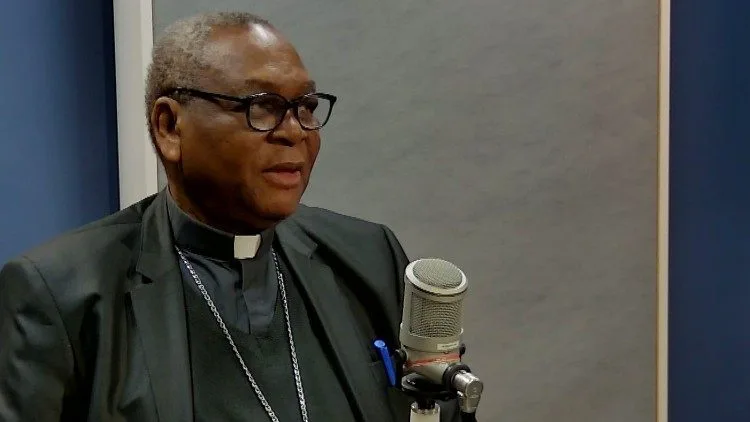


The Archbishop Emeritus, Catholic Diocese of Abuja, John Cardinal Onaiyekan, has said President Bola Tinubu made it “quite clearly” known that he disagreed with the concerns raised by members of the Catholic Bishops’ Conference of Nigeria (CBCN) during their meeting with him at the State House, Abuja.
Recall that President Bola Tinubu met with members of the Catholic Bishops’ Conference of Nigeria (CBCN) at the State House, Abuja, on July 28, 2026, where the bishops raised concerns about the economy, insecurity and the country’s political climate.
Speaking with ARISE NEWS on Friday, Archbishop Onaiyekan said President Tinubu responded directly to the concerns raised by the bishops during the meeting, stressing that the President made it “quite clearly” known that he disagreed with their assessment of the economy, insecurity and the country’s political climate.
“When the nation is bleeding, you cannot expect a polite meeting with the Head of State. We had to let him know. And his reply is that the nation is not bleeding. We told him the economy is not helping our poor people; he told us the economy is doing fine. Frankly speaking, he told us quite clearly that he did not agree with us.
“Again, we were not surprised. We didn’t expect him to agree with us. We have done our duty, we have delivered our message, and we have a feeling that somehow, along the line, somebody will show him a few of the things we said,” he said.
He also maintained that the bishops’ statement was the product of broad consultations within the Catholic Bishops’ Conference of Nigeria (CBCN), stressing that it reflected the collective position of the conference rather than the views of a few individuals. Onaiyekan added that the bishops had no political ambitions but a duty to speak truthfully about the realities facing Nigerians.
“Let me say first and foremost that that statement read by our president was not just put together at random. It was carefully considered and with wide consultation. The Bishops’ Conference is bigger than the group of us that were there, but it is very representative of the Bishops’ Conference. So, it is the Catholic Bishops’ Conference that produced that document. It was written, rewritten, and corrected. So it was not done at random, nor did we deliver it with levity,” he stressed.
“I think I have an opportunity in this program to remind Nigerians that, as bishops, we have no ambitions to take Mr. Tinubu’s job or anybody else’s job. We are not politicians running for office. We are, first and foremost, religious leaders who feel we have a duty—not just to preach our religious doctrines, but also to address the lives of our people, both those who are our members and those who are not. You can see that from the content and the tone of our statement,” he added.
Onaiyekan further said he was not surprised that President Tinubu appeared unhappy while listening to the bishops’ statement, noting that the delegation deliberately presented what it believed was the country’s reality rather than a favourable picture. He said the President’s response made it clear that he disagreed with their assessment.
“You asked me what I saw on the face of the President in reaction. I was not surprised that he was not looking very happy, nor were his colleagues who were there. We knew that this is different from the kind of statements that our President keeps receiving from all kinds of people. That is one of the things that worries us: there are so many people hanging around Mr. President, giving him a rosy picture of what the country is, which it is not.
“We felt that we have a duty not to do that. Indeed, we have the obligation to help him appreciate the reality of the situation in which we find ourselves. That is the reality that we painted, which I know is not the kind of thing that he wanted to hear. And his reply showed that very clearly,” he reiterated.
Despite the disagreement, Onaiyekan said the bishops left the meeting convinced that President Tinubu had heard their concerns because he responded directly to the issues they raised. He, however, expressed hope that those around the President would encourage him to reflect further on the bishops’ message, adding that too few people within government were willing to tell him the truth.
“He heard it, and he tried to tell us that he heard us, which is precisely why he replied the way he replied. He replied to the points we raised and disagreed with them, so he must have heard it.
“The real question now is: Is this disagreement his final position, or will there be people around him whose job it is to draw his attention that these guys who came here in white garments have not made any personal requests for oil wells or any particular personal things, and maybe he should listen to what they are saying?
“We believe one of the problems within our government right now is that there are not too many people telling him the truth, which is a pity. We need to have that, whether in terms of the economy, insecurity, and above all, the area of the political climate,” he said.
Turning to the country’s political climate, the bishop said the Catholic Bishops’ Conference’s warning about the “creeping danger” of a one-party dominant state was informed by concerns over the conduct of elections and the growing use of the powers of incumbency. He argued that politics should not be a contest where “everything can be done” simply to secure victory, warning that such an approach could undermine democracy.
“The position of Mr. President came very clearly in that statement that he made: ‘In politics, all is fair.’ Is that true? If that is what politics is—that in politics everything can be done provided you win elections. That is certainly not correct. There is propriety in everything. That is why we are worried about it. We are worried about the fact that we see clearly that our government is bent on winning by all means, and unfortunately, they have a lot of means at their disposal to win. They are deploying all those means in a way that eventually, even if we had a free and fair election, the votes of the people may not count.


