

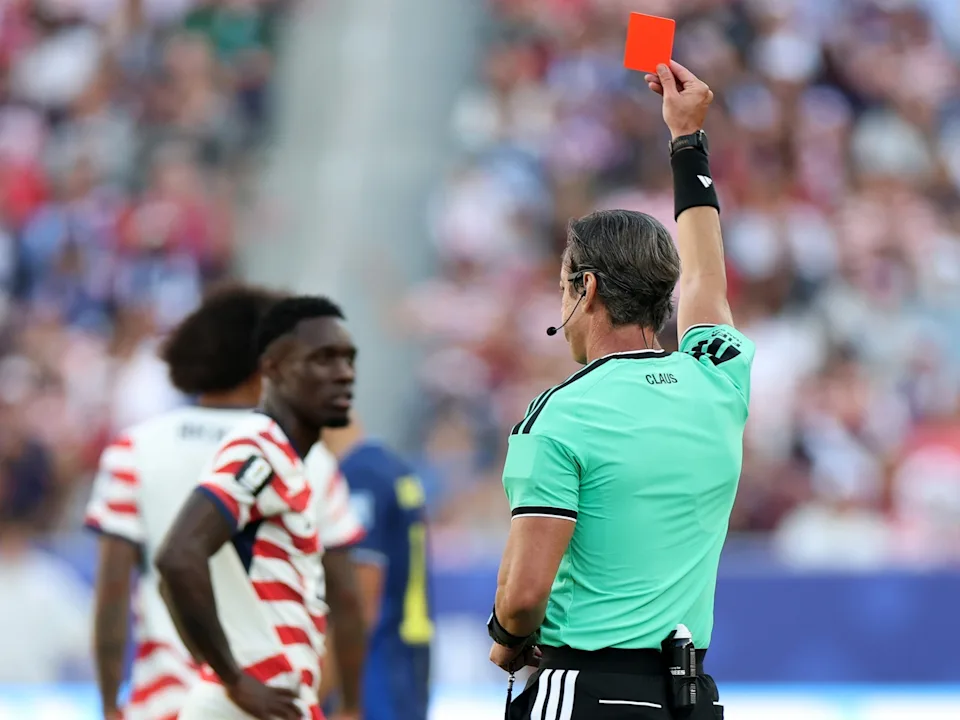


FIFA is seeking to tighten its disciplinary rules to prevent a repeat of the controversy surrounding United States striker Folarin Balogun, whose automatic one-match suspension was controversially lifted during the World Cup.
The proposed amendment will be presented to the FIFA Council at its meeting in Zurich on Thursday, the first gathering of the governing body’s decision-making arm since the tournament.
A document reviewed by The Athletic showed that the proposal seeks to prevent the suspension of automatic one-match bans in future competitions, arguing that the change would protect the integrity of tournaments and provide greater certainty over player eligibility.
The document stated that the amendment was necessary “to ensure stability and predictability regarding player eligibility and, therefore, protect the integrity of competitions.”
However, the timing of the proposal has raised concerns among sources close to FIFA Council members, who said the wording was circulated to members on Tuesday night, less than 48 hours before the meeting.
They argued that the move appeared designed to repair the damage caused by the decision to allow Balogun to play after his red card, insisting that the existing rules were not widely considered unclear before the controversy.
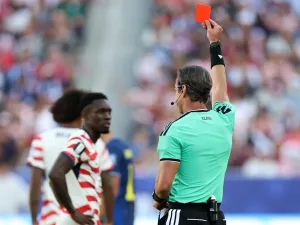
Balogun, who plays for French club Monaco, was sent off during the United States’ round-of-32 match against Bosnia and Herzegovina. Under FIFA’s World Cup regulations, the dismissal appeared to trigger an automatic one-match suspension that would have ruled him out of the subsequent round-of-16 encounter against Belgium.
However, FIFA suspended the ban, allowing the 25-year-old to feature against Belgium, who defeated the United States 4-1 to eliminate the hosts.
The decision followed a telephone call from United States President Donald Trump to FIFA president Gianni Infantino, requesting a review of the case. FIFA has maintained that the decision was taken by its independent disciplinary panel, while Infantino has denied playing a role in the outcome.
US Soccer also submitted arguments challenging the decision to send Balogun off, including concerns that the video assistant referee presentation to the on-field official relied excessively on freeze-frames and slow-motion footage.
The decision drew strong criticism from UEFA, European football’s governing body, which described the ruling as “incomprehensible” and said it had “crossed a red line”.
The controversy has added to the pressure on Infantino, who has faced questions over other decisions, including the FIFA Peace Prize awarded to Trump and a failed attempt to sell the governing body’s commercial business to private US investors.
The English Football Association chair and FIFA vice-president, Debbie Hewitt, also wrote to Infantino last month requesting the release of documents relating to the Balogun case.
The proposed amendment seeks to establish additional limits on Article 27 of FIFA’s disciplinary code, the provision invoked to allow the striker to play against Belgium.
Infantino’s position has since appeared to stabilise, with the Confederation of African Football and South American football authorities backing him. Concacaf president and FIFA vice-president Victor Montagliani has also decided against challenging him in the forthcoming presidential election.
The proposed rule change will now be considered by the FIFA Council as the governing body seeks to prevent similar disputes over automatic suspensions in future tournaments.